Delving into roofing warranty options, this introduction immerses readers in a unique and compelling narrative. From the significance of various warranty options to factors to consider when choosing, this guide covers it all in a casual formal language style that is both engaging and informative.
As we dive deeper into the world of roofing warranties, you'll gain a thorough understanding of the types available and how they can benefit homeowners.
Importance of Roofing Warranty Options
Having various warranty options for roofing is crucial for homeowners as it provides them with peace of mind and financial protection in case of any issues with their roof.
Advantages of Different Types of Roofing Warranties
- Manufacturer's Warranty: Typically covers defects in materials and workmanship, ensuring that the homeowner is not responsible for faulty products or installation.
- Workmanship Warranty: Guarantees the quality of the installation work done by the roofing contractor, offering reassurance that any issues arising from poor installation will be rectified.
- Lifetime Warranty: Offers long-term protection for the roof, giving homeowners confidence that their investment is secure for the duration of their ownership.
- Transferable Warranty: Allows the warranty to be transferred to a new homeowner if the property is sold, adding value to the home and making it more attractive to potential buyers.
Types of Roofing Warranty Options
When it comes to roofing warranty options, there are a few common types that are typically offered in the industry. These warranties provide coverage for different aspects of your roof, offering protection and peace of mind for homeowners. Let's delve into the main types of warranties available and explore the differences between them.
Manufacturer Warranties
Manufacturer warranties are typically provided by the company that produced the roofing materials used on your roof. These warranties cover defects in the materials themselves, such as premature deterioration or failure. They usually have a duration ranging from 20 to 50 years, depending on the type of material.
It's important to note that manufacturer warranties do not cover issues related to installation or workmanship.
Workmanship Warranties
Workmanship warranties, on the other hand, are offered by the roofing contractor and cover the installation of the roof. These warranties ensure that the installation was done correctly and in accordance with industry standards. Workmanship warranties usually have a shorter duration compared to manufacturer warranties, typically ranging from 1 to 10 years.
They cover issues such as leaks, improper flashing, and other installation-related problems.
Comparison of Warranty Coverage
| Aspect | Manufacturer Warranty | Workmanship Warranty |
|---|---|---|
| Defects in Materials | Covered | Not Covered |
| Installation Issues | Not Covered | Covered |
| Duration | 20-50 years | 1-10 years |
Factors to Consider When Choosing Roofing Warranties
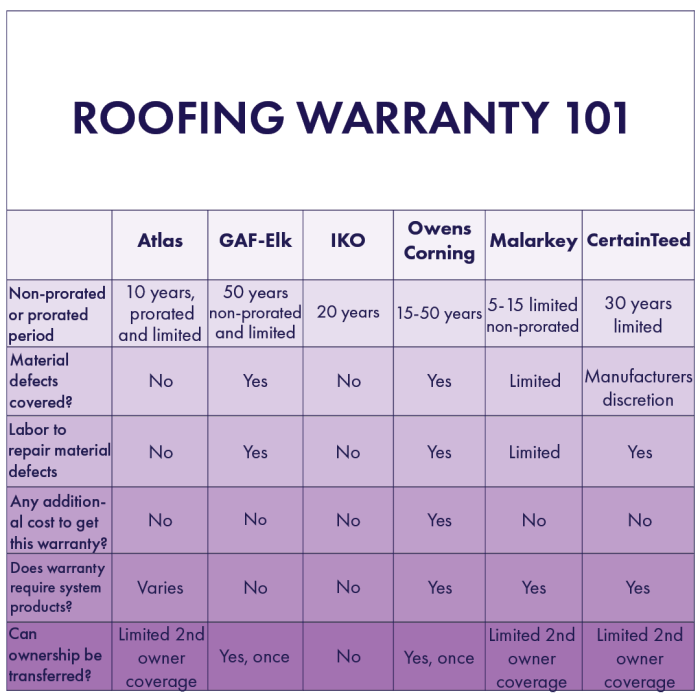
When selecting roofing warranty options, homeowners should carefully consider various factors to ensure they are getting the best coverage for their roof. It is crucial to assess the warranty length, coverage limitations, and the credibility of the warranty provider.
Warranty Length
The length of the warranty is a key factor to consider when choosing roofing warranties. A longer warranty period provides more extended protection for your roof against potential damages. It is essential to opt for a warranty with a duration that aligns with the expected lifespan of your roof.
Coverage Limitations
Understanding the coverage limitations of a roofing warranty is vital to avoid any surprises in the future. Homeowners should carefully review what is included and excluded from the warranty coverage. It is recommended to choose a warranty that offers comprehensive coverage for various types of damages.
Evaluating Credibility
Assessing the credibility of a roofing warranty provider is crucial to ensure that they will honor the terms of the warranty when needed. Homeowners can evaluate the credibility of a warranty by researching the reputation of the provider, reading reviews from other customers, and checking if the warranty is backed by a reputable insurance company.
Understanding Warranty Claims and Coverage
When it comes to roofing warranties, understanding the process of filing a claim and the coverage provided is essential to ensure you get the most out of your warranty. Below, we will detail common scenarios where roofing warranties may or may not provide coverage, as well as provide a step-by-step guide on what to do if a roofing problem arises and how to involve the warranty provider.
Filing a Warranty Claim
- Inspect the issue: The first step is to identify the roofing problem and determine if it is covered under your warranty.
- Contact the warranty provider: Reach out to the warranty provider and inform them of the issue you are facing.
- Provide necessary documentation: Be prepared to provide any documentation or proof of purchase required to support your claim.
- Schedule an inspection: The warranty provider may schedule an inspection to assess the roofing problem and determine if it is covered.
- Follow up: Stay in touch with the warranty provider to ensure your claim is being processed in a timely manner.
Coverage Scenarios
- Common scenarios where roofing warranties may provide coverage include defects in materials, workmanship issues, and leaks due to installation errors.
- Roofing warranties may not cover damage caused by natural disasters, improper maintenance, or modifications made to the roof without the warranty provider's approval.
- It is important to review the warranty terms and conditions to understand what is covered and excluded from the warranty.
Involving the Warranty Provider
- Communicate clearly: Provide detailed information about the roofing problem and any steps you have taken to address it.
- Follow the warranty process: Adhere to the steps Artikeld in the warranty documentation for filing a claim and involving the warranty provider.
- Be patient: Allow the warranty provider sufficient time to assess the issue and provide a resolution.
- Seek clarification: If you have any questions or concerns about the warranty coverage or claim process, don't hesitate to reach out to the warranty provider for clarification.
Final Summary
In conclusion, roofing warranty options are crucial for homeowners looking to protect their investment. By understanding the different types, factors to consider, and how to handle warranty claims, you can ensure your roof is well-covered for years to come.
FAQs
What are the key factors to consider when choosing roofing warranty options?
Homeowners should consider the length of the warranty, coverage limitations, and the credibility of the warranty provider.
How can homeowners evaluate the credibility of a roofing warranty?
Homeowners can evaluate credibility by researching the reputation of the warranty provider, checking for customer reviews, and understanding the terms and conditions of the warranty.
What is the difference between manufacturer warranties and workmanship warranties?
Manufacturer warranties cover defects in materials, while workmanship warranties cover installation issues. It's important to understand the coverage provided by each type.